


0102030405
Disco Ball for Sale: How to Choose the Right One
2026-08-19
A disco ball for sale may look like a simple decorative product at first glance. It is, after all, a sphere covered with small reflective mirrors.
But once a light hits the surface and the ball starts rotating, the effect changes completely.
Tiny points of light move across the ceiling, walls, floor, and audience. The atmosphere becomes more dynamic without requiring a complicated lighting setup. That is one of the reasons disco balls have remained popular in nightclubs, bars, weddings, DJ events, and stage productions for so many years.
For venue owners, event planners, DJs, lighting designers, and professional buyers, however, choosing a disco ball involves more than picking a suitable size. The mirror quality, motor, installation method, lighting source, and operating environment all matter.
This guide takes a closer look at what you should consider before buying a disco ball and how to choose one for your specific application.
What Is a Disco Ball?
A disco ball, also known as a mirror ball, is a spherical lighting decoration covered with numerous small reflective mirror tiles.
When a light source is aimed at the rotating ball, each mirror reflects a small portion of the light in a different direction. As the ball turns, those reflections move continuously around the room.
It is a simple concept. The visual effect, however, can be surprisingly effective.
Today, disco balls are used far beyond traditional disco venues. You can find them in:
- Nightclubs and dance clubs
- Bars and lounges
- DJ performances
- Wedding venues
- Concerts and live events
- Theaters and stage productions
- Festivals
- Private parties
- Entertainment centers
- Retail and themed spaces
They can also be combined with modern LED fixtures, moving heads, Beam Lights, strobes, lasers, and DMX-controlled equipment to create a much more layered lighting environment.
Why Are Disco Balls Still Popular?
Lighting technology has changed dramatically over the years. Yet the disco ball has never really disappeared.
Why?
Because it moves in a very straightforward way.
1. They Create Constantly Moving Reflections
A stationary decorative light can illuminate a space, but it does not necessarily make the room feel alive.
A rotating mirror ball is different. The reflected light keeps moving, creating a changing pattern that naturally attracts attention.
This works particularly well on dance floors, where movement is already the focus.
2. They Work With Many Different Light Sources
You do not necessarily need a dedicated fixture to illuminate a disco ball.
A focused LED spotlight can work. So can a beam light, moving head, or other narrow-angle light source.
That flexibility makes disco balls relatively easy to incorporate into an existing Lighting System.
3. They Fit Different Types of Venues
Not every venue needs a large mirror ball hanging from the ceiling.
Smaller models can work nicely in compact bars, private rooms, restaurants, and home entertainment areas. Larger versions are better suited to nightclubs, ballrooms, stages, and larger commercial spaces.
4. They Combine Retro Style With Modern Lighting
There is also a visual reason for their continued popularity.
A mirror ball immediately communicates a certain atmosphere. It has a familiar retro appearance, but the lighting around it can be completely modern.
Pair one with RGBW fixtures, moving heads, or programmable DMX lighting, and the result can look very different from the classic disco style.
What Should You Look for When Buying a Disco Ball for Sale?
Searching for a disco ball for sale online will give you plenty of options. The challenge is deciding which one actually fits your project.
Price is only one part of the decision.
1. Choose the Right Disco Ball Size
Size affects both the appearance of the installation and how visible the reflected light will be.
A small mirror ball may disappear visually in a large nightclub. On the other hand, installing an oversized ball in a small room can make the space feel crowded.
Before ordering, consider:
- Ceiling height
- Room dimensions
- Viewing distance
- Available installation space
- Lighting intensity
- Desired visual impact
Think about the whole room rather than the ball itself.
That usually leads to a better choice.
2. Pay Attention to Mirror Quality
The mirror surface is what creates the actual lighting effect, so its quality should not be overlooked.
A well-made disco ball should have reflective tiles distributed consistently across the spherical surface. Poorly positioned or uneven mirror pieces can create an inconsistent reflection pattern.
For commercial applications, also consider durability. A nightclub or rental company may use the equipment repeatedly, sometimes for many hours at a time.
Look at factors such as:
- Mirror reflectivity
- Tile size and consistency
- Surface finish
- Adhesion quality
- Spherical construction
- Overall build quality
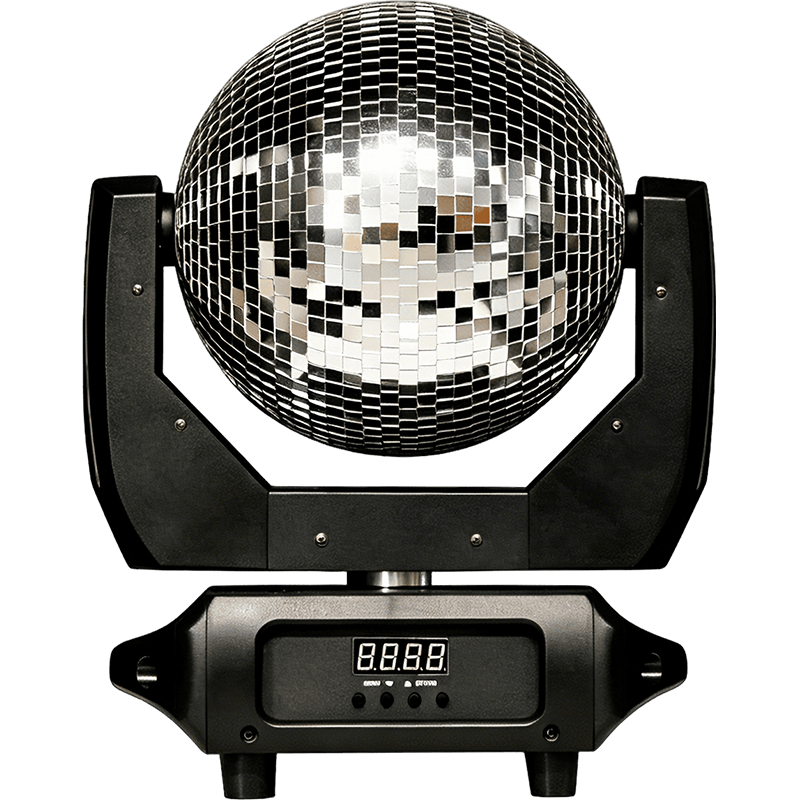
A good-looking product in a product photo does not necessarily mean it will perform well after months of regular use.
3. Consider the Rotation Speed
The motor determines how the mirror ball moves, and the rotation speed can noticeably change the atmosphere.
Slow rotation tends to create a softer and more relaxed effect. Faster movement feels more energetic and can work particularly well in dance-focused environments.
For example:
Slow rotation works well for weddings, lounges, restaurants, and atmospheric installations.
Medium rotation can suit bars, parties, and general entertainment spaces.
Faster rotation is often more appropriate for nightclubs, DJ performances, and energetic dance floors.
There is no single “best” speed. It depends on what you want people to see and feel.
4. Don’t Ignore the Motor
The mirror ball gets most of the attention, but the motor is doing the hard work.
A weak or poorly designed motor can result in unstable rotation, excessive noise, or premature failure. That might not matter much for a one-night private party. It matters considerably more in a nightclub that operates every week.
For professional applications, look for a motor with:
- Stable rotation
- Low operating noise
- Reliable continuous operation
- Appropriate load capacity
- Secure mounting
- Long-term durability
If the equipment will be used frequently, motor reliability should be treated as a core specification rather than an afterthought.
5. Check the Installation Method
Where will the disco ball actually be installed?
It might hang from a ceiling. It could be attached to a lighting truss. In some event installations, a temporary rigging structure may be used.
The mounting system must be suitable for the weight of the ball and motor, as well as the conditions of the installation site.
For professional stage and entertainment projects, always follow the manufacturer’s installation instructions and applicable local safety requirements.
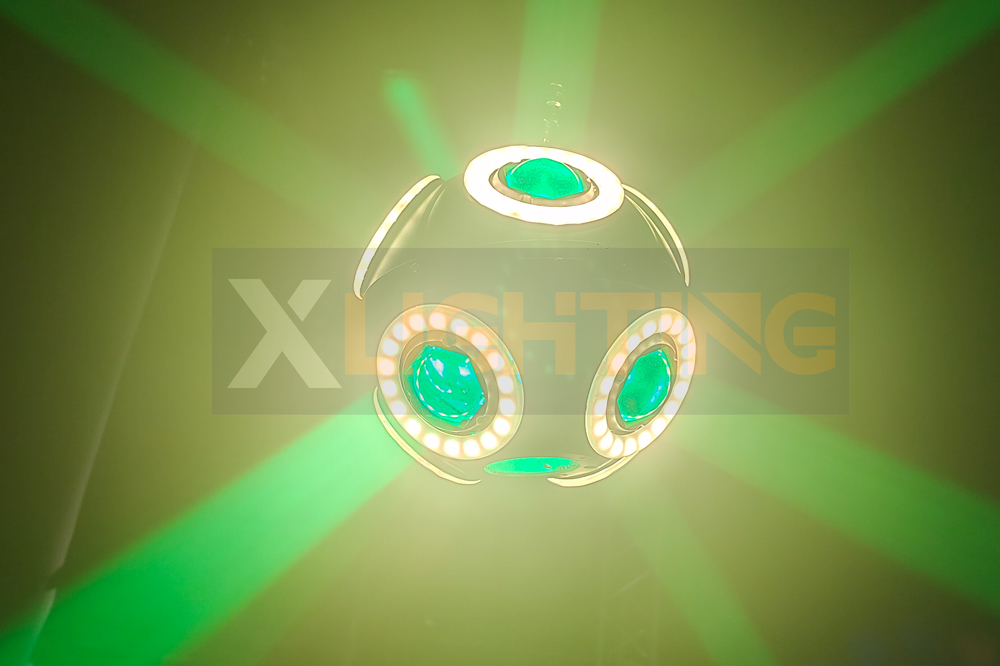
What Type of Light Should You Use With a Disco Ball?
A disco ball only reflects light. It does not produce the light itself.
That means your choice of light source has a major effect on the final appearance.
LED Spotlight
A focused LED spotlight is one of the simplest options.
It can provide a concentrated beam onto the mirror surface without requiring a complicated control system. This works well for smaller venues and decorative installations.
Moving Head Light
Want more movement?
A moving head gives you much greater control over the position and direction of the light beam. Instead of illuminating the mirror ball from a fixed position, you can change the beam during a performance.
The combination of a rotating disco ball and moving head can produce a much more dynamic visual effect.
Beam Light
Beam lights are another strong option, particularly when you want a narrow, concentrated beam.
The effect becomes more noticeable when there is some atmospheric haze in the venue, allowing the beam itself to become visible in the air.
RGB or RGBW Lighting
White light is not your only option.
RGB and RGBW fixtures allow the reflections to take on different colors, making the disco ball easier to integrate into a modern lighting design.
This approach is particularly useful for:
- Nightclubs
- DJ booths
- Concerts
- Festivals
- Themed events
- Entertainment venues
Disco Ball vs. Other Lighting Effects
A disco ball has a very specific visual character. It does not replace a moving head, laser, or LED wash light.
Instead, it complements them.
| Lighting Effect | Main Visual Effect | Common Applications |
| Disco Ball | Moving reflected light points | Clubs, parties, weddings |
| LED PAR Light | Broad colored illumination | Stages, events, venues |
| Moving Head | Dynamic beam, wash, or effects | Concerts, clubs, stages |
| Laser Light | Sharp beams and graphic effects | Clubs, festivals, concerts |
| Kinetic Lighting | Three-dimensional movement | Shows, installations, concerts |
This is why professional lighting designers often treat a disco ball as one element within a larger lighting system.
It does something different.
How to Use a Disco Ball in a Nightclub
Nightclubs are perhaps the most obvious application.
A typical installation might combine a mirror ball with moving heads, LED bars, beam fixtures, strobes, and other special effects.
The disco ball provides a continuous layer of moving reflections, while the other fixtures handle the more complex effects.
A few practical considerations can make a noticeable difference:
- Choose a visible installation position.
The ball should be visible from as much of the venue as possible. - Use a focused light source.
A broad wash may illuminate the ball but produce less defined reflections. - Control ambient light.
The effect is generally easier to see when competing light sources are limited. - Match rotation speed to the music and atmosphere.
A slower effect can work during relaxed sections, while faster movement can add energy. - Combine different lighting effects.
Reflected light becomes much more interesting when used alongside beams, colors, strobes, and movement.
Using a Disco Ball for Weddings and Events
The disco ball has also found a place in modern weddings and event design.
During a reception, for example, a mirror ball can create subtle reflections across the dance floor without dominating the entire room.
Later, once the party begins, the lighting can become more energetic.
This makes the disco ball surprisingly versatile.
For elegant events, consider using white or warm-toned illumination. For a party atmosphere, RGB or RGBW lighting can introduce stronger colors and movement.
The same physical product can therefore support very different event styles.
Decorative vs. Professional Disco Balls
Not every disco ball for sale is designed for commercial use.
That distinction is worth considering before you place an order.
Decorative Disco Balls
Decorative models are generally intended for occasional use and lighter applications.
They may be suitable for:
- Home parties
- Small rooms
- Restaurants
- DIY lighting projects
- Temporary decorations
In these situations, appearance may be the primary consideration.
Professional Disco Balls
Professional models are designed with more demanding environments in mind.
Depending on the product, they may offer better:
- Construction quality
- Mirror consistency
- Motor reliability
- Operating stability
- Installation options
- Long-term durability
If you are purchasing equipment for a nightclub, theater, event company, rental business, or stage production, professional-grade equipment is usually worth considering.
Where Can You Buy a Disco Ball for Sale?
There are plenty of online sources selling disco balls, but B2B buyers should look beyond the product listing.
If you are purchasing several units for a project, ask the supplier for detailed specifications before making a decision.
Useful information includes:
- Product dimensions
- Product weight
- Mirror material
- Motor specifications
- Rotation speed
- Power requirements
- Installation method
- Recommended applications
- Packaging details
- Warranty information
For distributors, rental companies, lighting contractors, and event suppliers, other factors may become equally important.
These can include:
- OEM/ODM services
- Custom product development
- Bulk order capability
- Quality control
- Technical support
- Export experience
- After-sales service
For a larger order, requesting a sample first is often a sensible step. It allows you to check the actual construction and lighting effect before committing to a full production run.
Can a Disco Ball Work With a Professional DMX Lighting System?
Yes, depending on the motor and control configuration.
A professionally designed lighting system can combine a disco ball with:
Disco Ball + LED PAR Lights + Moving Heads + Beam Lights + Strobes + DMX Control
Each fixture has a different role.
The disco ball provides moving reflections. Moving heads add direction and motion. LED fixtures bring color. Beam lights create concentrated shafts of light, while strobes provide short bursts of high-energy effects.
Together, they can create a much richer lighting environment than any single fixture could produce on its own.
For projects that require synchronized operation or centralized control, check the motor’s control capabilities before purchasing.
How to Choose the Right Disco Ball for Your Project
Still comparing different products?
Start with the application.
For a Small Party
A compact mirror ball and simple spotlight may be all you need.
For a Wedding
Choose a size that fits the venue and consider softer lighting for a more refined effect.
For a Nightclub
Durability, motor reliability, installation height, and compatibility with the existing lighting system become much more important.
For a Stage or Concert
Consider how the disco ball will interact with moving heads, beams, LED fixtures, haze, and DMX control.
For a Lighting Rental Company
Look beyond appearance. Equipment that will be transported and operated repeatedly needs reliable construction, secure mounting, and a motor capable of regular use.
For a Distributor or Wholesale Buyer
Supplier capability matters just as much as the product.
Check production capacity, customization options, quality control, packaging, technical support, and long-term supply stability.
Final Thoughts
A disco ball for sale may seem like a simple lighting product, but the right model can have a surprisingly strong impact on a venue.
The key is not simply finding the cheapest mirror ball or the largest one available.
Instead, consider the complete setup.
Think about the size of the room. Think about where the ball will be installed. Think about how often it will operate, what type of light will illuminate it, and whether it needs to become part of a professional DMX lighting system.
For a small private event, a basic rotating mirror ball may be perfectly adequate. For a nightclub, stage, rental company, or commercial entertainment project, a more durable product with a reliable motor and professional installation system is likely to provide better long-term value.
The concept behind the disco ball is simple. Its visual possibilities are not.
With the right size, motor, lighting source, and installation position, a traditional mirror ball can work surprisingly well alongside today’s LED, moving head, beam, strobe, and DMX lighting technologies.
If you are searching for a disco ball for sale for a nightclub, event venue, DJ setup, stage, or commercial lighting project, evaluate the entire lighting solution rather than the mirror ball alone. That is the better way to achieve a consistent visual effect—and a more reliable investment for your project.