

0102030405
LED Par Can: Types, Uses & Buying Guide
2026-08-14
When planning a stage lighting system, it is easy to focus on moving heads, Beam Lights, strobes, and other effects. But there is another fixture that often does the quieter, more important work: the LED par can.
It may not be the most visually complicated fixture on the lighting rig. It does not need a rotating head or a large selection of built-in effects to be useful. What it does need is reliable output, good color mixing, flexible control, and enough power to cover the stage properly.
That is why LED Par Can Lights continue to appear in concerts, theaters, nightclubs, churches, wedding venues, corporate events, and outdoor productions.
Modern LED technology has also changed what a PAR fixture can do. Instead of relying on a traditional halogen lamp and physical color filters, today’s LED par cans can produce multiple colors electronically, consume less power, generate less heat, and integrate directly into a DMX-controlled lighting system.
What Is an LED Par Can?
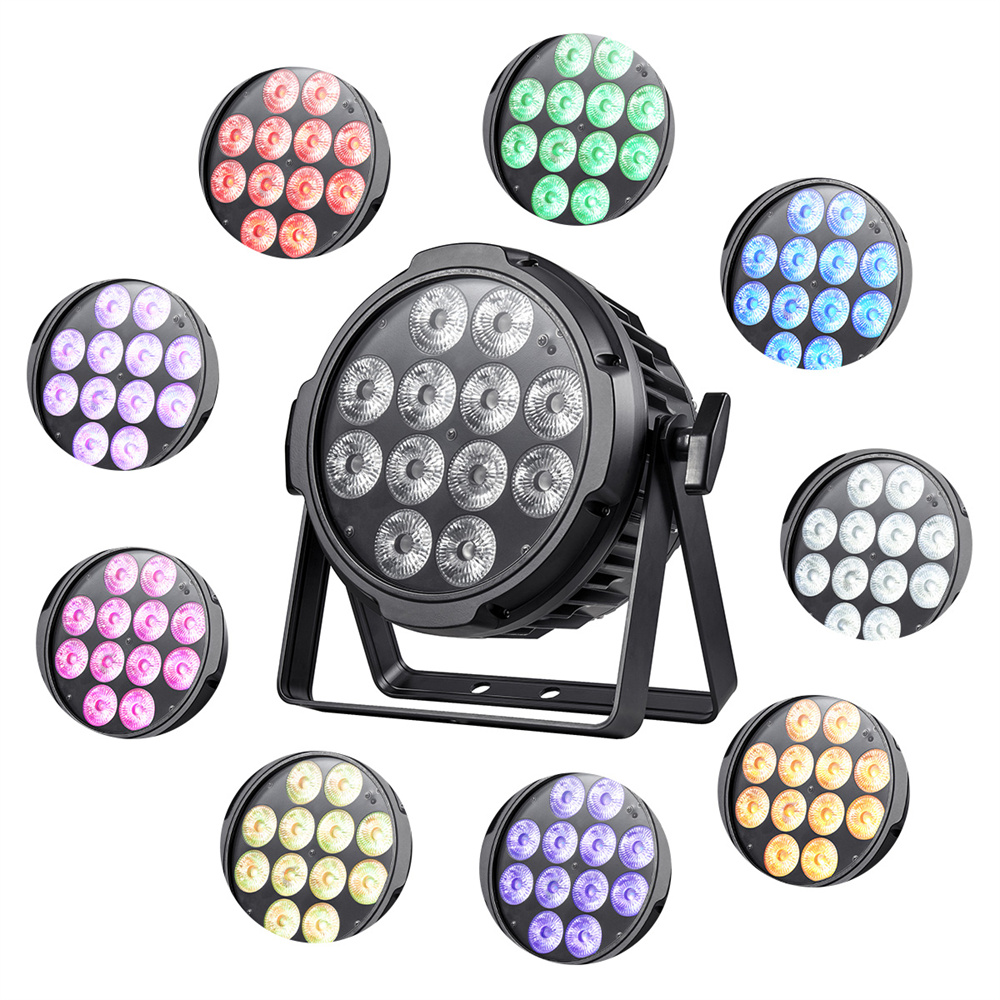
An LED par can is a stage lighting fixture that uses LEDs as its primary light source. The name comes from the traditional PAR lamp, or Parabolic Aluminized Reflector, which was widely used in stage and entertainment lighting.
The basic idea remains simple: produce a strong, directional wash of light.
The difference is in the technology behind it.
Instead of replacing hot halogen lamps or changing colored gels, an LED par can uses LED chips—often arranged in RGB, RGBW, RGBA, or RGB+UV configurations—to create different colors and lighting effects.
Many professional models also support DMX512, allowing lighting operators to control intensity, color, strobe, and other functions from a lighting console.
For a small event, a single fixture may be enough to add color to a wall or stage area. For a larger production, dozens of LED par cans can be grouped into zones and programmed as part of a much more complex lighting design.
Why Are LED Par Cans So Popular?
The popularity of LED par can lighting is not based on one feature. It is the combination of efficiency, flexibility, and relatively simple operation that makes these fixtures so useful.
1. Lower Power Consumption
Traditional halogen PAR fixtures can consume considerable amounts of power, especially when many units are running at the same time.
LED technology changes that equation.
A modern LED par can can deliver strong stage illumination while consuming substantially less power than many conventional alternatives. This matters even more for rental companies and venues operating large lighting rigs every week.
Lower energy consumption can also make system planning easier when the available electrical capacity is limited.
2. More Flexible Color Control
With a traditional PAR fixture, changing color usually means changing a gel or filter. LED fixtures take a completely different approach.
RGB LEDs can mix red, green, and blue to create a wide variety of colors. RGBW fixtures go a step further by adding a dedicated white LED.
That extra white channel is useful.
It can produce cleaner white light and more natural-looking pastel tones while still allowing the fixture to create saturated colors when the show calls for them.
Depending on the LED configuration and control system, an LED par can may be used for:
- Deep and saturated colors
- Soft pastel colors
- Warm white and cool white effects
- Gradual color fades
- Stage washes
- Uplighting
- Strobe and pulse effects
The fixture itself is simple. The possibilities are not.
3. Longer LED Service Life
One of the practical advantages of LED lighting is its long operating life.
A traditional lamp eventually needs to be replaced, and for rental companies or touring productions, that can become a routine maintenance task. LEDs generally require much less frequent replacement.
That does not mean an LED fixture can be installed and forgotten. Dust, heat, power quality, connectors, cooling systems, and other electronic components still matter.
But with proper maintenance, a good-quality LED par can can remain a dependable part of a lighting inventory for a long time.
4. Less Heat Around the Stage
Anyone who has worked around traditional stage lighting knows how quickly a large number of halogen fixtures can raise the temperature.
LED fixtures generally produce much less radiant heat. That makes them more comfortable for performers and crew, particularly in smaller venues where ventilation is limited.
It is also useful when fixtures are positioned near scenery, decorations, fabrics, or other heat-sensitive materials.
Common Types of LED Par Can Lights
There is no single LED par can configuration that works perfectly for every project. The right choice depends on the required color range, brightness, installation environment, and control requirements.
RGB LED Par Can
RGB is one of the most common configurations.
By combining red, green, and blue LEDs, the fixture can generate a broad range of colors. RGB LED par cans are often used for general stage washes, decorative lighting, entertainment venues, and event production.
If the main goal is strong, colorful lighting rather than highly accurate white light, RGB can be a practical choice.
RGBW LED Par Can
RGBW adds a dedicated white LED channel to the traditional RGB configuration.
This small change can make a noticeable difference in professional applications. A dedicated white source generally provides cleaner white output and gives lighting designers more control over subtle tones.
For productions that need both colorful effects and useful white illumination, an RGBW LED par can is often the more versatile option.
RGBA and RGB+UV LED Par Can
Some fixtures add amber or UV LEDs to expand the available color palette and create additional effects.
RGBA fixtures can be useful when warmer tones and more refined color mixing are required. RGB+UV models, on the other hand, are particularly interesting for clubs, DJs, live entertainment, and productions where ultraviolet effects are part of the visual design.
These fixtures tend to cost more than basic RGB models, so it makes sense to choose them only when the additional functionality is actually needed.
Outdoor LED Par Can
Outdoor lighting brings a different set of requirements.
A fixture that performs well inside a theater does not automatically belong on an outdoor stage. Rain, dust, humidity, and temperature changes can all affect electronic equipment.
For outdoor festivals, concerts, weddings, architectural events, and temporary installations, an LED par can with an appropriate IP rating is a much safer choice.
When comparing outdoor models, do not look at the IP rating alone. Housing quality, connectors, cable design, thermal management, and long-term weather resistance should also be considered.
LED Par Can vs. Traditional PAR Can
LED technology has changed the role of the traditional PAR fixture considerably.
| Feature | LED Par Can | Traditional PAR Can |
| Light Source | LED | Halogen or incandescent lamp |
| Power Consumption | Lower | Higher |
| Heat Output | Lower | Higher |
| Color Mixing | Electronic | Usually requires filters |
| Lamp Replacement | Rarely required | Regularly required |
| DMX Control | Common | More limited |
| Operating Life | Long | Shorter |
| Maintenance | Relatively low | More frequent |
Of course, the decision is not always about replacing an old fixture with a new one.
Some productions still use traditional PAR fixtures because they like the specific warmth and character of halogen light. For most modern event and stage applications, however, the flexibility of LED technology is difficult to ignore.
Where Are LED Par Cans Used?
This is where the versatility of the fixture becomes particularly obvious.
An LED par can does not have to perform one specific job. Its role can change depending on how it is positioned and programmed.
Concerts and Live Performances
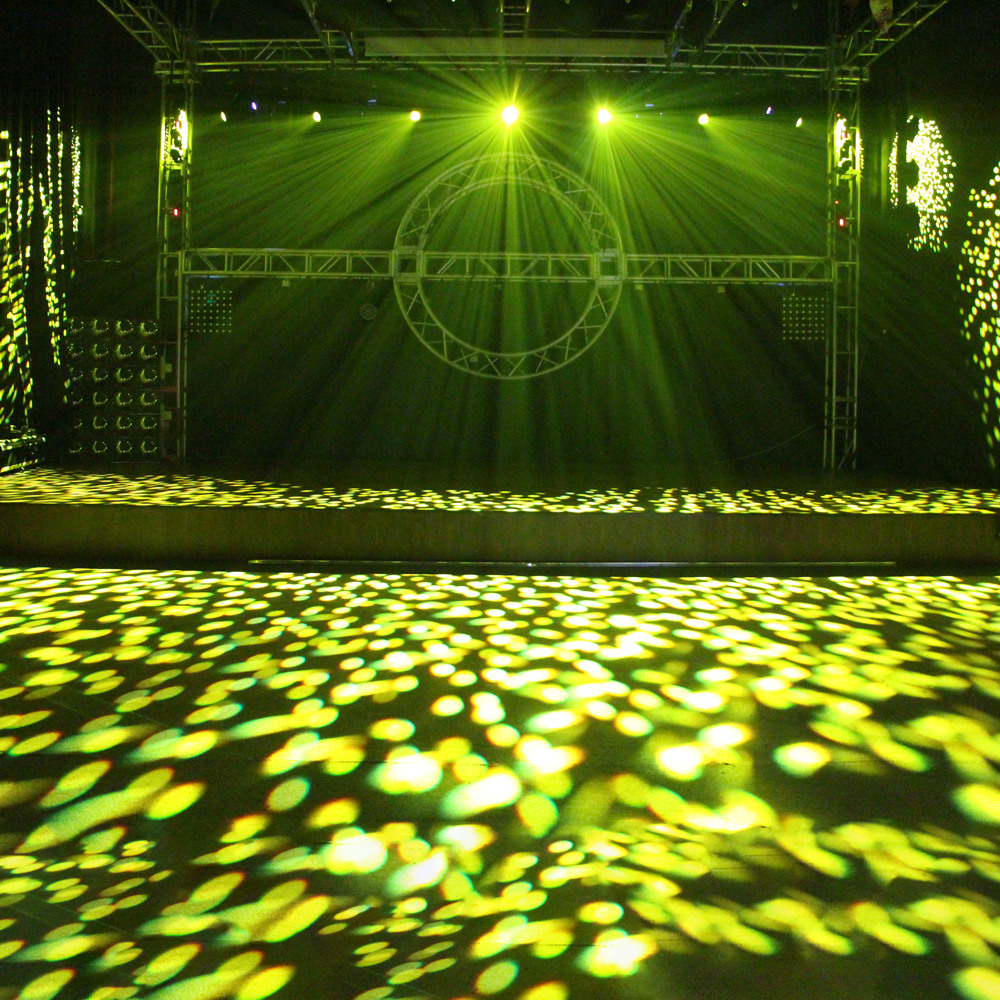
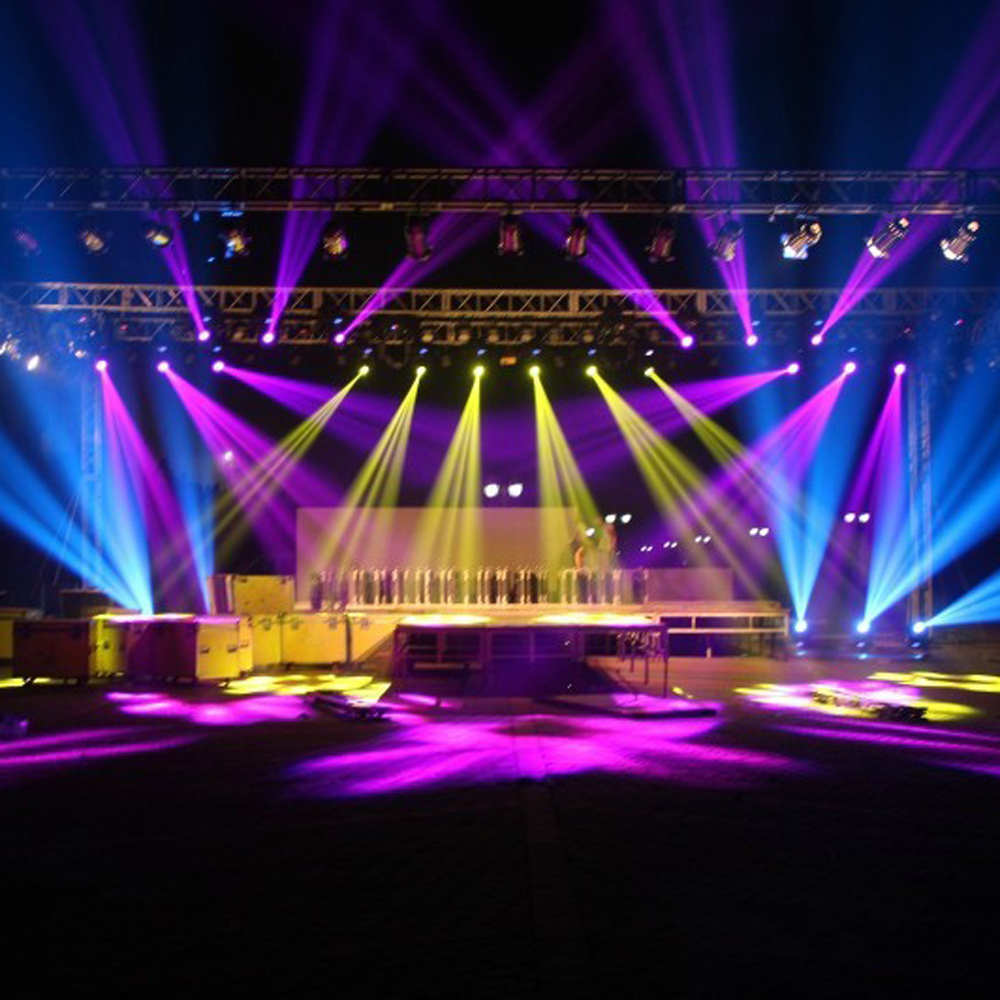
In a concert environment, LED par cans can be used to color the stage, illuminate performers, highlight set pieces, or create a visual background.
They become even more effective when combined with moving heads, beam lights, strobes, and other effects.
For example, par cans can handle the basic stage wash while moving heads provide movement and aerial effects. The result is a more balanced lighting design rather than a stage filled with effects that compete with one another.
Theater Productions
Theater lighting often needs to be controlled rather than flashy.
A scene may require a warm wash one moment and a cooler, darker atmosphere a few seconds later. LED par cans can handle these transitions smoothly when programmed correctly.
RGBW fixtures are particularly useful when the lighting design requires subtle white tones rather than highly saturated colors.
Nightclubs and DJ Events
Nightclubs are a different story.
Here, color changes, pulses, strobe effects, and synchronization become much more important. LED par cans can be programmed through DMX and integrated with other entertainment lighting to create a more dynamic environment.
They are often used around the stage, behind performers, along walls, or as uplights around the venue.
Weddings and Corporate Events
For weddings, LED par cans are frequently used as uplighting fixtures.
Place them around the room, point them toward the walls, and the atmosphere can change dramatically without adding much physical equipment.
The same principle works for corporate events. Brand colors can be incorporated into the lighting design, while different scenes can be created for presentations, networking sessions, dinners, or performances.
Architectural and Decorative Lighting
Not every LED par can is installed on a lighting truss.
Some are placed on the floor or positioned around architectural structures to highlight walls, columns, entrances, stages, and decorative elements.
RGB and RGBW models work especially well here because the color can be changed without replacing physical filters.
What Should You Look for When Buying an LED Par Can?
Buying an LED par can based only on wattage is a common mistake.
Two fixtures with the same LED power may produce very different results because optical design, LED efficiency, lens quality, beam angle, thermal management, and electronics all influence performance.
Here are the specifications worth paying attention to.
1. LED Power and Actual Light Output
Wattage tells you how much electrical power the fixture uses. It does not tell the whole story about brightness.
When comparing products, look at actual light output, optical efficiency, LED quality, beam angle, and photometric data where available.
For professional projects, these details are far more useful than simply choosing the fixture with the highest wattage.
2. RGB, RGBW, or Other LED Configurations
Think about the lighting design first.
If you primarily need bold colors for parties, clubs, or stage effects, RGB may be enough.
If you also need clean white light for performers, presentations, or theater scenes, RGBW is usually more flexible.
For specialized entertainment applications, RGBA or RGB+UV may be worth considering.
3. Beam Angle
Beam angle determines how widely the light spreads.
A narrow beam can create a more concentrated pool of light, while a wide beam can cover a larger area with fewer fixtures.
There is no universally “best” beam angle. It depends on the distance between the fixture and the target, the size of the stage, and the desired visual effect.
4. DMX512 and Control Options
For professional stage lighting, DMX512 compatibility is often essential.
A DMX-controlled LED par can can be integrated with moving heads, wash lights, strobes, lasers, and other fixtures through a lighting console.
Before buying, check the DMX channel modes and available functions. RDM support may also be useful for larger installations because it can simplify fixture configuration and management.
5. IP Rating for Outdoor Applications
If you are buying fixtures for outdoor use, pay close attention to the IP rating.
Indoor fixtures are generally suitable for theaters, clubs, studios, conference rooms, and event halls. Outdoor installations require stronger protection against moisture and dust.
And again, IP rating is only part of the picture. The overall housing design and quality of the electrical connections matter too.
6. Cooling and Thermal Management
LEDs are efficient, but they still produce heat.
A professional fixture needs to move that heat away from the LED source and other sensitive electronic components. Poor thermal management can affect output stability and component life.
Look at the fixture’s ventilation design, heat sink, fan system if applicable, and overall construction.
For installations where the fixture will operate for many hours at a time, this becomes particularly important.
How to Position LED Par Cans on a Stage
A good fixture can still produce poor results if it is positioned badly.
Instead of placing every LED par can in the same location, lighting designers usually distribute them across several positions.
Front Lighting
Front-mounted fixtures provide general illumination for performers and speakers.
The goal is usually even coverage without making the lighting look flat.
Side Lighting
Side lighting adds depth and can help emphasize movement, especially in dance and theatrical productions.
Back Lighting
Backlighting separates performers from the stage background. It can also create silhouettes and stronger visual depth.
Floor Lighting
Floor-mounted LED par cans are useful for uplighting and dramatic effects. They can highlight performers, walls, scenic elements, and architectural structures.
Background Lighting
Par cans positioned toward the back of the stage can add color to scenic elements or create a visual layer behind performers.
The most effective lighting systems do not ask one fixture to do everything. LED par cans work best when their strengths are combined with the capabilities of other fixtures.
LED Par Can vs. Other Stage Lighting Fixtures
It is useful to understand where LED par cans fit into a larger lighting system.
LED Par Can vs. Moving Head
A moving head can pan and tilt, allowing the beam or wash to move across the stage. A conventional LED par can generally remains fixed once installed.
Moving heads are therefore better for dynamic movement, while par cans are excellent for stable washes and background illumination.
LED Par Can vs. Beam Light
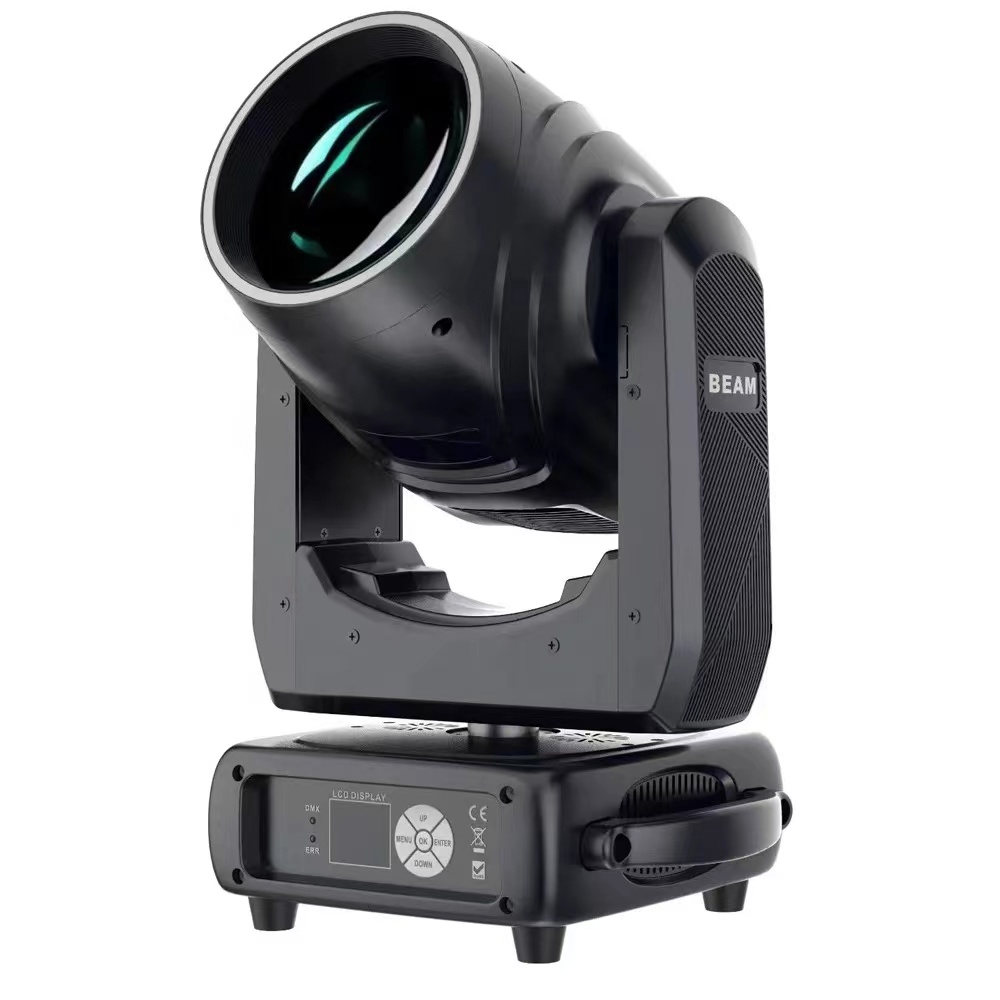
Beam fixtures create narrow, concentrated shafts of light and are often used for aerial effects.
An LED par can has a much broader role. It is usually more useful for stage washes, uplighting, and color coverage.
LED Par Can vs. LED Wash Light
There is some overlap between these two fixture types. However, professional LED wash lights may offer more advanced optical systems, zoom functions, motorized movement, or larger output.
The right choice depends on the production rather than the product category alone.
In many professional lighting rigs, these fixtures are used together.
Maintenance Tips for LED Par Can Lights
LED fixtures are generally low-maintenance, but they are not maintenance-free.
A few simple habits can help keep them performing consistently.
Clean the Lens and Housing
Dust on the lens can affect light output. Dust around ventilation openings can also interfere with heat dissipation.
For rental and touring equipment, regular cleaning should be part of the normal maintenance routine.
Inspect DMX and Power Connections
A lighting fixture may appear to have a problem when the real issue is a loose cable or damaged connector.
Check power cables, DMX cables, connectors, and signal routing before replacing a fixture.
Keep Ventilation Open
Do not cover ventilation openings or place fixtures where airflow is severely restricted.
Heat is one of the most important factors affecting the long-term reliability of electronic lighting equipment.
Test Fixtures Before Events
This is especially important for rental companies.
Before loading equipment onto a truck, test the LED output, color mixing, dimming, strobe, DMX response, connectors, and mounting hardware.
A five-minute inspection in the warehouse is much easier than discovering a problem after the event has started.
Choosing an LED Par Can Manufacturer
For individual users, the fixture itself may be the main concern. For distributors, rental companies, lighting contractors, and OEM buyers, the manufacturer matters just as much.
A reliable LED par can supplier should be able to provide consistent product quality across batches, clear technical specifications, responsive technical support, and dependable after-sales service.
For B2B projects, it is also worth asking about:
- OEM and ODM services
- Custom branding
- LED configurations
- Housing customization
- DMX control options
- RDM support
- CE and RoHS compliance
- Production capacity
- Spare parts availability
- Warranty policy
- Technical support
- Packaging and shipping requirements
These details may not appear important when comparing products on paper. They become very important once fixtures are being used commercially.
Final Thoughts on LED Par Can Lighting
The LED par can may be one of the simpler fixtures in a professional lighting system, but that simplicity is part of its strength.
It is compact. It is easy to control. It can produce strong colors, useful white light, or both, depending on the LED configuration. It also works across a surprisingly wide range of applications—from small wedding venues to large concerts and outdoor festivals.
When choosing an LED par can, do not focus on wattage alone. Consider the complete fixture: light output, LED configuration, beam angle, DMX512 control, IP protection, thermal management, construction quality, and long-term reliability.
For professional buyers, the supplier should also be part of the evaluation.
A good manufacturer does more than deliver lighting fixtures. It should be able to support product customization, provide consistent production quality, offer technical assistance, and help customers select the right configuration for their projects.
Used properly, LED par cans can form the backbone of a practical stage lighting system. Add moving heads for movement, beam lights for aerial effects, strobes for impact, and other special effects where needed—and a relatively simple lighting rig can become a highly flexible production system.